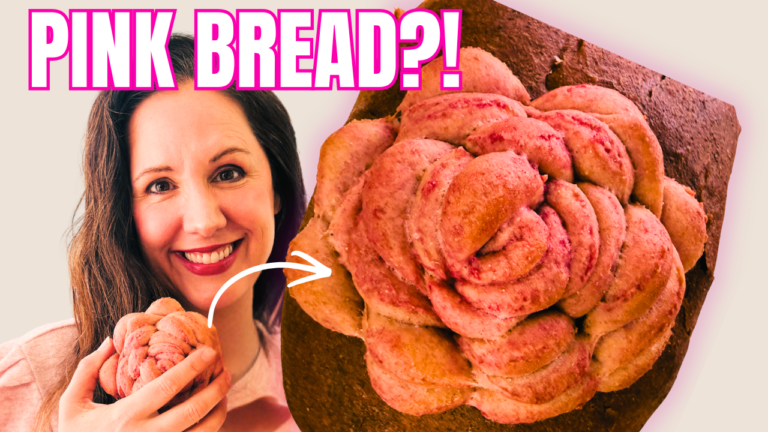
Fresh Milled Flour Sandwich Bread (One Loaf Recipe for Beginners)

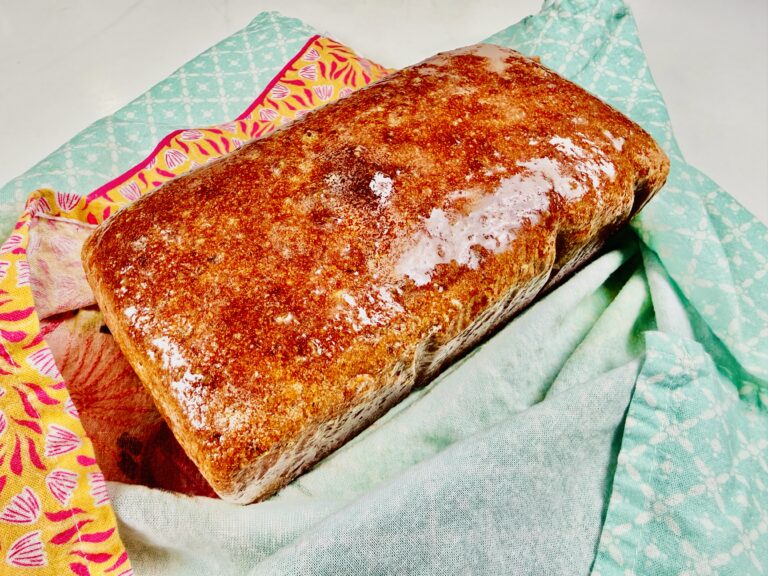
This fresh milled sandwich bread recipe for one loaf makes a soft sandwich loaf using about 360–390 grams of freshly milled hard white wheat flour. The dough rises twice and bakes at 350°F for about 30 minutes until the internal temperature reaches 190°F.
What Is a Fresh Milled Sandwich Bread Recipe for One Loaf?
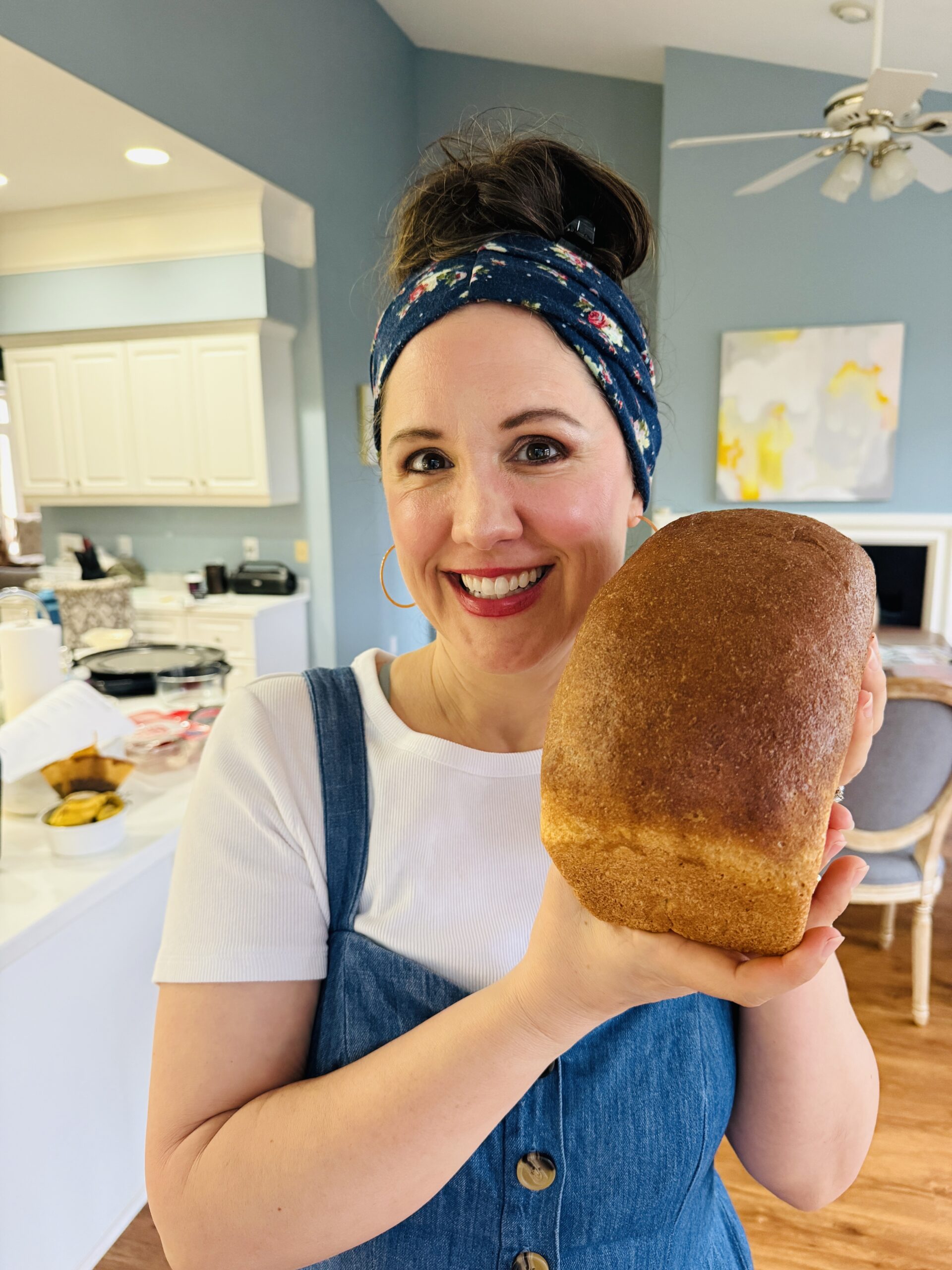
Fresh Milled Sandwich Bread (One Loaf): Fresh milled sandwich bread can be made with 360–390 grams of freshly milled hard white wheat flour, warm water, oil, honey, egg, salt, and yeast. The dough is mixed using the straight dough method, kneaded for about 20 minutes, allowed to rise twice, and baked at 350°F for about 30 minutes until the internal temperature reaches 190°F. This recipe produces one soft sandwich loaf that is perfect for sandwiches and toast.
How to Make Fresh Milled Sandwich Bread (One Loaf)
Step 1: Mill the Hard White Wheat Berries
Mill enough hard white wheat berries to yield about:
360–390 grams of flour (3 to 3¼ cups)
Fresh milled flour is best used immediately after milling because it preserves the nutrients, flavor, and natural oils in the grain. To see this video, you may find it here
Step 2: Mix the Wet Ingredients
In a mixing bowl combine:
- warm water
- honey
- oil
- egg
- yeast
- salt
Stir until everything is smooth and combined.
Step 3: Mix and Rest (20 Minutes)
Add the fresh milled flour to the bowl and mix until a rough dough forms.
Let the dough rest for about 20 minutes.
This rest period helps hydrate the bran and allows gluten development to begin. Fresh milled flour especially benefits from this step because the bran particles need time to soften and absorb water.
Step 4: Knead the Dough
Knead the dough for about 20 minutes until it becomes smooth and elastic.
If you are using a stand mixer, knead on low to medium speed.
A properly kneaded dough should:
- feel soft and slightly tacky
- stretch without tearing
- form a smooth surface
These signs indicate the gluten network has developed properly.
Step 5: Bulk Fermentation (First Rise)
Place the dough in a lightly oiled bowl and cover.
Allow the dough to rise for 60–75 minutes, or until doubled in size.
Fresh milled flour often benefits from a slightly longer rise because the bran slows fermentation slightly compared to refined flour.
Step 6: Shape the Loaf
Turn the dough onto a work surface and gently flatten it into a rectangle.
Roll the dough tightly to form a loaf and place it into a greased bread pan.
Tight shaping helps create a taller sandwich loaf, which gives the bread a better texture for slicing.
Step 7: Final Rise
Cover the pan and allow the dough to rise for 35–45 minutes.
The dough should rise to about one inch above the rim of the pan before baking.
Step 8: Bake
Bake at:
350°F (175°C) for 30 minutes
The bread is finished baking when the internal temperature reaches:
190°F
Allow the bread to cool for 30 minutes before slicing so the crumb can fully set.
Ingredients for One Loaf of Fresh Milled Sandwich Bread
Fresh Milled Flour Sandwich Bread (One Loaf Recipe for Beginners)
Ingredients
Method
- Mill hard white wheat berries to fresh flour and use it immediately. In a bowl, combine warm water, honey, oil, egg, yeast, and salt, stirring until smooth. Add the fresh milled flour, mix, and let the dough rest for 20 minutes to fully hydrate the bran and begin gluten development, which is especially important for fresh milled flour. Then knead for about 20 minutes until the dough is smooth and elastic and can stretch without tearing.
- Place the dough in a lightly oiled bowl, cover, and let it rise for 60–75 minutes until doubled. Gently flatten into a rectangle, roll tightly into a loaf, and place in a greased cast iron bread pan. Let it rise again for 35–45 minutes, until about 1 inch above the pan. Bake at 350°F (175°C) for 30 minutes, or until the internal temperature reaches 190°F, then allow it to cool for at least 30 minutes before slicing.
Video
This recipe makes one standard sandwich loaf.
| Ingredient | Volume | Grams |
|---|---|---|
| Fresh milled hard white wheat flour | 3 to 3¼ cups | 360–390 g |
| Warm water (105–110°F) | 1 cup | 240 g |
| Oil | 2½ tbsp | 35 g |
| Honey | 2½ tbsp | 50 g |
| Egg | 1 large | 50 g |
| Salt | 1 tsp | 6 g |
| Active dry yeast | 2 tsp | 6 g |
🛒 TOOLS I USE IN MY KITCHEN:
🔥 Dutch Oven, safe for 500 degrees, essential for that crackly crust:https://amzn.to/4wgiEpP
🍞 Cast Iron Loaf Pan, I bought two, one goes on top of the bread:https://amzn.to/4aMEDf7
⚖️ Kitchen Scale, strongly recommended for accurate baking:https://amzn.to/4sb03JZ
My FAVORITE Banneton Baskets:
https://amzn.to/4viDhks Oval
https://amzn.to/3SOvBc9 ROUND
BLUE Large Spatula: https://amzn.to/44XYBAP
BLACK Large Spatula: https://amzn.to/4h3HCEA
🌡️ Instant Read Kitchen Thermometer, takes the guesswork out:https://amzn.to/3MWTueZ
🥣 Danish Dough Whisk, the best tool for mixing sourdough:https://amzn.to/4y0NSmI
🟢 Lime Green Bowl Scraper, my favorite dough tool:
https://amzn.to/46oJcef
🩶 Stainless Steel Bench Scraper, cut dough and clean countertops
https://amzn.to/4r0rm8P
🧂Redmond Real Salt: with MINERALS!https://amzn.to/3ZXdYam
🥄 Spurtle, perfect for stirring and scooping sourdough starter:https://amzn.to/3ZOlg09
🧤 Oven Mittens, for that HOT HOT Dutch oven:
https://amzn.to/4eI1VVa oven mitts
https://amzn.to/4eTiX2L with fingers
🚿 Shower Cap, my personal favorite way to cover dough:https://amzn.to/4qUQ3Dw
🍯 Beeswax Bread Bag, for storing your finished loaf naturally:https://amzn.to/4oYEaNA
🌟 Cute Star Shapes, optional but so fun:https://amzn.to/4bae2cG
🧺 Super Pretty Tea Towel, for covering your dough beautifully:
https://amzn.to/3R5vh8l
⏲️ My visual timer:
https://amzn.to/4t0MMUH
Bosch Universal Mixer: https://amzn.to/4bH3YIq
Kitchen Aid Mixer: https://amzn.to/4w3s9cp
📌 DISCLAIMER: As an Amazon Associate, I earn from qualifying purchases. I only share tools I personally use and love.
🔔 New videos every week! Subscribe so you never miss a recipe:
https://www.youtube.com/@freshflourliving
Why This Recipe Mixes Everything Together
Some bread recipes use a method called autolyse, where the flour and water are mixed first and allowed to rest before adding the other ingredients.
For this one loaf sandwich bread recipe, we keep things simple by using the straight dough method, which means all the ingredients are mixed together from the beginning.
This works very well for sandwich bread because the flour continues hydrating while the dough kneads and during the first rise. Gluten development still happens naturally during these stages.
The result is a simple process that still produces a soft, structured loaf.
Does Salt Kill Yeast?
Many new bakers worry that adding salt and yeast together will stop the bread from rising.
In a bread dough like this one, salt does not kill the yeast.
Once everything is mixed with flour and water, the yeast and salt become diluted throughout the dough. This allows the yeast to ferment normally and produce carbon dioxide, which makes the bread rise.
Salt actually plays several helpful roles in bread baking:
• it slows fermentation slightly
• it strengthens the gluten network
• it improves flavor
• it helps the dough hold its shape
Salt can interfere with yeast only if it sits directly on concentrated yeast granules with very little moisture. Once flour and water are present and the dough is mixed, fermentation proceeds normally.
You can think of it like adding salt to a large pot of soup. Once it is stirred in, it spreads evenly throughout the mixture.
Why Fresh Milled Flour Makes Better Bread
Fresh milled flour contains the entire wheat kernel, which provides:
- more nutrients
- more fiber
- natural oils from the wheat germ
- richer flavor
Because the bran is still present, fresh milled flour absorbs more water and benefits from slightly longer kneading and hydration.
Once you learn how to work with it, fresh milled flour produces bread that is both more flavorful and more nutritious than refined flour.
More Fresh Milled Bread Recipes
If you’re new to baking with fresh milled flour, you may also enjoy my other recipes here:
https://freshflourliving.com/recipes
I share beginner-friendly recipes for:
- sandwich bread
- sourdough bread
- muffins and quick breads
- baked goods made with ancient grains like einkorn
Fresh Milled Sandwich Bread (One Loaf) FAQ
Can you make bread with freshly milled flour?
Yes. Freshly milled flour can make excellent bread. Because the flour contains the entire wheat berry (bran, germ, and endosperm), it has more flavor and nutrients than store-bought flour. Fresh milled flour absorbs more water and often benefits from longer kneading and hydration.
What wheat is best for fresh milled sandwich bread?
Hard white wheat is one of the best grains for sandwich bread. It produces a lighter color, softer texture, and milder flavor compared to hard red wheat.
Why does fresh milled flour need more kneading?
Fresh milled flour contains bran, which can interrupt gluten development. Kneading longer helps strengthen the gluten network so the bread can trap gas and rise properly.
Does salt kill yeast in bread dough?
No. Salt does not kill yeast in normal bread dough. Once salt and yeast are mixed with flour and water, they are diluted throughout the dough. Salt actually strengthens gluten and improves flavor while slightly slowing fermentation.
How much fresh milled flour do you need for one loaf of bread?
A typical single loaf of bread uses about 360–390 grams of freshly milled flour, which is roughly 3 to 3¼ cups.
Happy Baking ~ Ashley 💛 Join my SUBSTACK for more!