Why Is My Sourdough Dough Flat? (How to Fix Underproofed Dough)
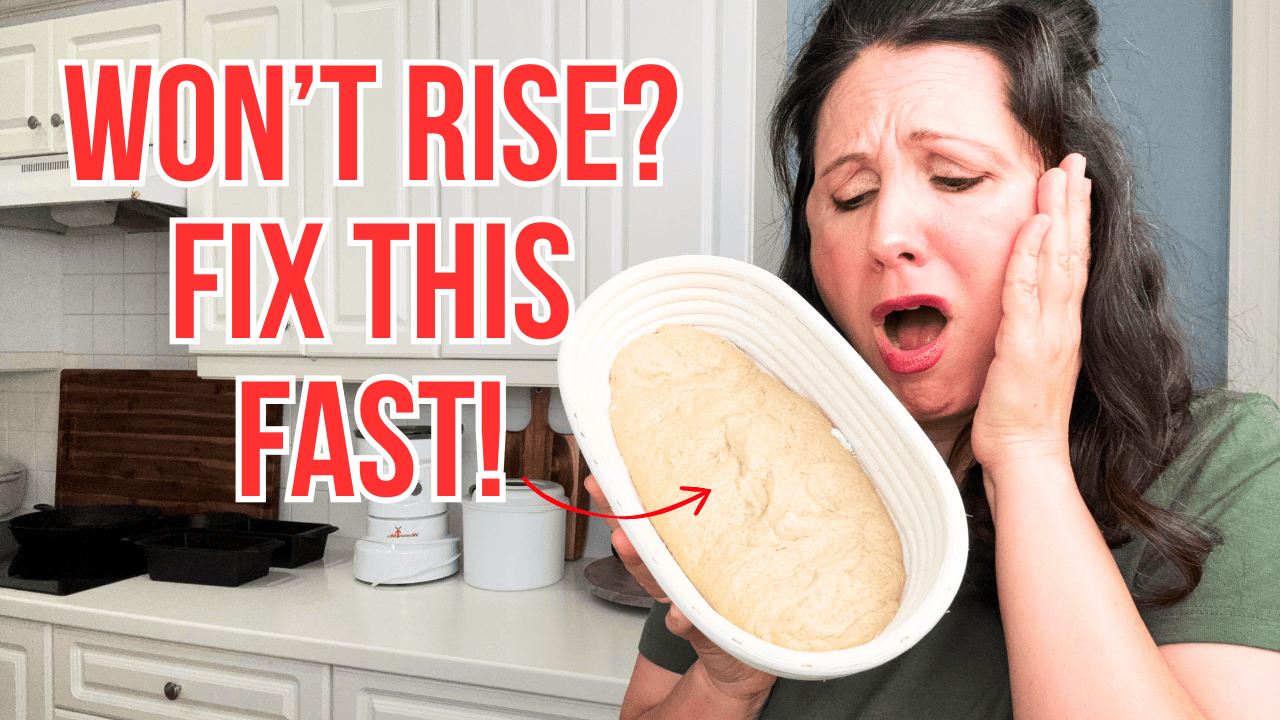
If your sourdough dough comes out of the fridge looking flat instead of domed above the rim of your banneton or pan, it’s almost always underproofed, meaning it needs more time (and usually more warmth) before it’s ready to bake. The good news: you can often fix it on the spot rather than starting over.
This happens more than people talk about, especially with fresh-milled flour, which ferments more slowly than store-bought flour. Here’s exactly how to tell if that’s what’s going on, and the simple trick I use to fix it without any fancy equipment.
You can watch MY VIDEO ON YOUTUBE!
Why Doesn’t My Sourdough Dough Fill the Pan?
Dough that doesn’t fill the pan is almost always a sign of underproofing, meaning fermentation hasn’t gone far enough to build the volume and structure needed to fill the space. A few things commonly cause this:
- Not enough proofing time. This is the most common cause, especially with fresh-milled flour, which has more bran and germ than store-bought flour and ferments more slowly as a result.
- A kitchen that’s cooler than you think. Even a kitchen that feels comfortable, like 70–72°F, is noticeably slower for fermentation than the 75–80°F range dough really thrives in.
- Underdeveloped gluten. If the dough wasn’t strengthened enough during mixing and stretch-and-folds, it won’t hold gas well even with enough time.
- A starter that wasn’t at peak strength when it went into the dough, which limits the dough’s rising power from the very beginning.
How Can You Tell if Sourdough Dough Is Underproofed?
The most reliable way to tell if dough is underproofed is the poke test: press a floured finger about half an inch into the dough and watch how it responds. If it springs back instantly, it needs more time. If it springs back slowly and leaves a slight indent, it’s ready to bake.
A few other signs to look for alongside the poke test:
- Doming: Properly proofed dough should rise visibly above the rim of the banneton or pan, not sit level with it.
- A jiggly, airy feel when you gently shake the basket or pan, rather than a dense, tight feel.
- Volume, not just time. Don’t rely on the clock alone, fresh-milled dough especially can take longer than a recipe states depending on your kitchen’s temperature.

How Do You Fix Underproofed Sourdough Dough?
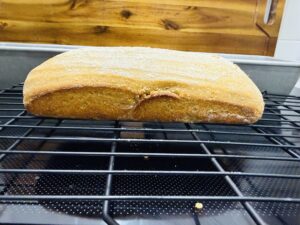
To fix underproofed sourdough dough, warm it up gradually and give it more time, checking every 20 to 30 minutes with the poke test rather than proofing on a fixed timer. If the dough came straight from the fridge, this can often bring it back on track without starting over.
Here’s the exact method I use, especially useful if your oven light doesn’t work or your kitchen runs cool:
- Boil a kettle or pot of water. Pour it into a heatproof bowl and place it on the bottom rack of your oven, completely turned off.
- Place your covered dough on the rack above it and close the oven door. The hot water creates warmth and humidity, acting like a mini proofing box with no special equipment needed.
- Check every 20 to 30 minutes with the poke test, opening the door just enough to check without losing too much warmth.
- Bake as soon as it passes the test. Once the dough domes nicely and springs back slowly with a slight indent, don’t let it sit any longer, bake it right away, since fresh-milled dough can move from properly proofed to overproofed fairly quickly once it’s warmed up.
If you don’t want to use the oven-and-hot-water method, a few other options work too:
- Near a warm appliance, like the top of your refrigerator or beside a running dishwasher
- A heating pad on low, with a folded towel between it and the dough, checked frequently
- Simply more time at room temperature, if you’re not in a rush, even a mildly cool kitchen will get there eventually, just more slowly
Why Does Fresh-Milled Flour Take Longer to Proof?
Fresh-milled flour contains the whole grain, including the bran and germ, which physically interferes with gluten formation and slows fermentation compared to refined, store-bought flour. This isn’t a flaw in your technique. It’s simply how fresh-milled dough behaves, and it usually means building in extra time and warmth rather than rushing the process.
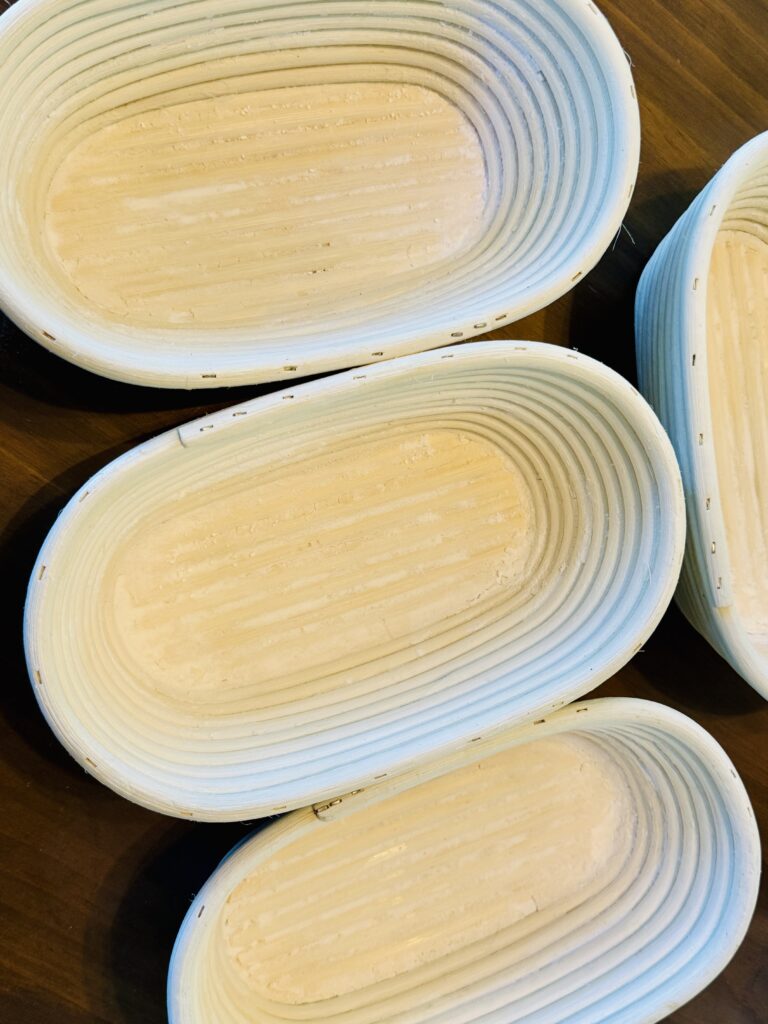
My Favorite Banneton Baskets
A good banneton makes a real difference in how evenly your dough proofs and holds its shape, especially once you’re troubleshooting a proof that’s behind schedule. These are the two I personally use and recommend:
Disclaimer: As an Amazon Associate, I earn from qualifying purchases. I only share tools I personally use and love.
📄 Get the FREE Fresh-Milled Conversion Cheat Sheet
Want to bake with fresh-milled flour but not sure where to start? Subscribe to Fresh Flour Living and I’ll send you my free one-page cheat sheet in your welcome email: exactly how much of each grain to swap for 1 cup all-purpose, how much water to add, and how to fix a dense loaf. Tape it inside your cabinet and bake with confidence. 💛
Frequently Asked Questions
Why is my sourdough dough flat instead of domed?
A flat loaf is almost always a sign of underproofing. The dough hasn’t fermented long enough to build the gas and structure needed to dome above the pan or banneton. Warming the dough and giving it more time usually resolves it.
Can you fix underproofed dough after it’s been in the fridge?
Yes. Let the dough warm up gradually at room temperature or in a slightly warmed oven, checking every 20 to 30 minutes with the poke test. Many loaves that look flat straight from the fridge will finish proofing successfully with a bit more warmth and time.
How long does it take to proof dough at room temperature?
It depends heavily on your kitchen’s temperature, but expect anywhere from 45 minutes to a few hours. Rely on the dough’s appearance and the poke test rather than the clock, since factors like flour type and room temperature change the timeline significantly.
Does fresh-milled flour take longer to rise than store-bought flour?
Yes. Fresh-milled flour contains the bran and germ of the whole grain, which slows gluten development and fermentation compared to refined flour. Building extra proofing time into your process is normal when baking with fresh-milled flour.
What is the poke test for sourdough?
The poke test involves pressing a floured finger about half an inch into the dough. If it springs back immediately, the dough needs more time. If it springs back slowly and leaves a slight indent, it’s ready to bake.
If you love baking with fresh-milled flour, you can find all of my recipes right here.

Happy Baking ~ Ashley 💛🍞