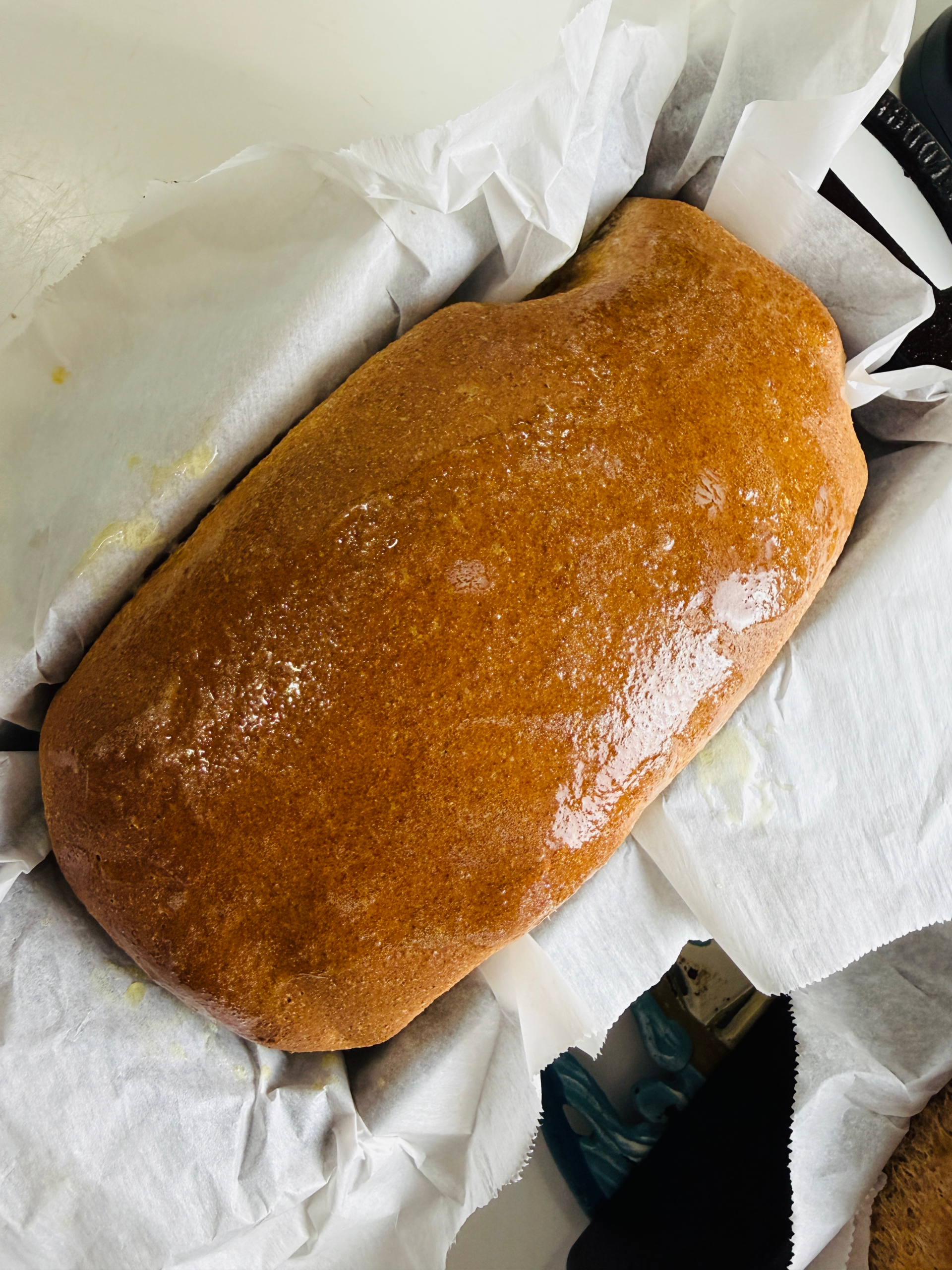
Soft and Fluffy Spelt Sandwich Bread Recipe (2 Loaves)
Soft and Fluffy Spelt Sandwich Bread Recipe (2 Loaves)
This homemade spelt sandwich bread recipe is the only recipe you need if you want soft, sliceable, nourishing bread made with ancient grain flour. Whether you are new to baking with spelt or have been milling your own grain for years, this recipe produces two perfect loaves every single time. Spelt flour creates a tender crumb, a slightly nutty flavor, and a loaf that holds together beautifully for sandwiches, toast, and everything in between.
Spelt is an ancient wheat relative that many people with wheat sensitivities tolerate better than modern wheat. It contains gluten, so it is not suitable for those with celiac disease, but its gluten structure is more fragile and water-soluble than modern wheat, which makes it easier to digest for many people. Using freshly milled spelt flour takes this recipe to the next level in nutrition and flavor.
Why This Spelt Sandwich Bread Recipe Works
- Uses simple pantry staples you already have on hand
- Makes two full loaves in one batch, perfect for families or meal prep
- Freshly milled spelt flour option maximizes nutrition and flavor
- The autolyse rest (resting the dough before kneading) develops gluten naturally without overworking the fragile spelt structure
- Baked in cast iron pans for even heat distribution and a beautiful crust
- Butter finish creates a soft, tender crust that slices cleanly
Recipe at a Glance
- Yield: 2 sandwich loaves
- Prep time: 20 minutes
- Rest time: 30 to 60 minutes
- Rise time: Approximately 1 hour (at 73 degrees F)
- Bake time: 30 minutes at 350 degrees F
- Total time: Approximately 2.5 to 3 hours
- Difficulty: Beginner-friendly
Spelt Sandwich Bread Ingredients
These ingredients make 2 standard sandwich loaves.
- 6 cups spelt flour (freshly milled is strongly recommended for best nutrition and flavor)
- 2 cups water, room temperature
- 1/3 cup honey
- 1/3 cup oil (avocado, coconut, or olive oil all work well)
- 1 egg
- 2 teaspoons active dry yeast
- 2 teaspoons salt -my favorite brand!
- Visual Timer
- Cast Iron Pans – I bought two
Ingredient Notes and Substitutions
Spelt flour: Freshly milled whole grain spelt flour gives you the most nutrients and a richer, earthier flavor. If you are using store-bought spelt flour, look for whole grain varieties. White spelt flour will produce a lighter loaf but with fewer nutrients.
Yeast: Active dry yeast is used in this recipe. You do not need to proof it separately when you combine it with the warm water and honey in the first mixing step. Instant yeast can also be used in the same quantity.
Honey: Raw honey or regular honey both work. Maple syrup can be substituted at a 1:1 ratio for a vegan version.
Egg: The egg adds richness and helps bind the loaf. For an egg-free version, a flax egg (1 tablespoon ground flaxseed mixed with 3 tablespoons water) can be used.
Equipment You Will Need
- Stand mixer (a KitchenAid or Bosch Universal with a dough hook is ideal)
- 2 cast iron loaf pans lined with parchment paper
- Large mixing bowl for the initial rest
- Pretty Kitchen towel to cover the pans during rising or resuable Shower Caps
- Instant-read thermometer to check internal temperature
- Beeswax Bread Bag
- Grain mill (optional but recommended for freshly milled spelt)
Ingredients:
- 6 cups spelt flour (freshly milled preferred, berries found here or through Azure Standard.) You can watch my Azure Standard Hauls on Youtube.)
- 2 cups water, room temperature
- 1/3 cup honey
- 1/3 cup oil
- 1 egg
- 2 teaspoons active dry yeast
- 2 teaspoons salt
How to Make Spelt Sandwich Bread: Step-by-Step Instructions
Step 1: Make the Initial Dough and Rest
In a large mixing bowl, combine 3 cups of spelt flour, the room temperature water, oil, honey, and yeast. Stir everything together until a shaggy, sticky dough forms. Cover the bowl loosely with a towel or plastic wrap and let it rest for 30 minutes to 1 hour.
This rest period is called autolyse. During this time, the spelt flour absorbs the liquid, the gluten begins to develop on its own, and the yeast wakes up and starts to activate. This step is one of the most important parts of working with spelt because its gluten network is more delicate than regular wheat. Letting it rest means you do not have to knead it as aggressively, which protects the structure.
Step 2: Knead the Dough
Transfer the rested dough to your stand mixer fitted with the dough hook. Add the salt and 1 cup of flour and begin mixing on medium-low speed. Continue adding the remaining flour about 1/2 cup at a time, waiting for each addition to be incorporated before adding more.
Knead in the mixer for approximately 15 minutes total. The dough should pull away from the sides of the bowl and feel smooth and slightly tacky but not sticky. Avoid adding too much extra flour, as spelt bread can become dense and dry if the dough is too stiff.
Step 3: Perform the Windowpane Test
Before shaping, test your gluten development using the windowpane test. Pull off a small piece of dough and gently stretch it between your fingers. If it stretches thin enough that light passes through it without tearing, your gluten is properly developed and the dough is ready to shape. You can see how I did it here.
If it tears immediately, knead for 2 to 3 more minutes and test again. This step ensures your bread will have the proper structure to rise tall and hold its shape.
Step 4: Shape the Loaves Using my Jelly Roll Method
Divide the dough into two equal portions. Shape each portion using the jelly roll method: flatten the dough into a rectangle roughly the width of your loaf pan, then roll it up tightly from one short end to the other, pinching the seam closed as you go. This creates surface tension on the outside of the loaf and helps it rise up rather than spread out.
For a visual tutorial on this shaping technique, watch the jelly roll shaping video on YouTube. Proper shaping is one of the most important factors in getting a tall, even sandwich loaf.
Step 5: Second Rise in Cast Iron Pans
Line two cast iron loaf pans with parchment paper. Place the shaped loaves seam-side down in the pans. Cover loosely with a kitchen towel and allow the loaves to rise until the dough reaches the top of the pan or rises about 1 inch above the rim.
At 73 degrees F, this took approximately 1 hour. In a warmer kitchen, it may happen faster. In a cooler kitchen, it may take up to 90 minutes. Do not judge the rise by time alone, judge it by how the dough looks in the pan. You want a full, rounded dome rising above the pan rim.
Step 6: Bake the Spelt Bread
Preheat your oven to 350 degrees F. Bake the loaves for 30 minutes. To confirm the bread is fully baked, insert an instant-read thermometer into the center of the loaf. The internal temperature should read 190 degrees F.
An internal thermometer is strongly recommended over relying on the timer alone. Ovens vary, and the internal temperature is the most reliable indicator of doneness.
Step 7: Finish with Butter and Cool Properly
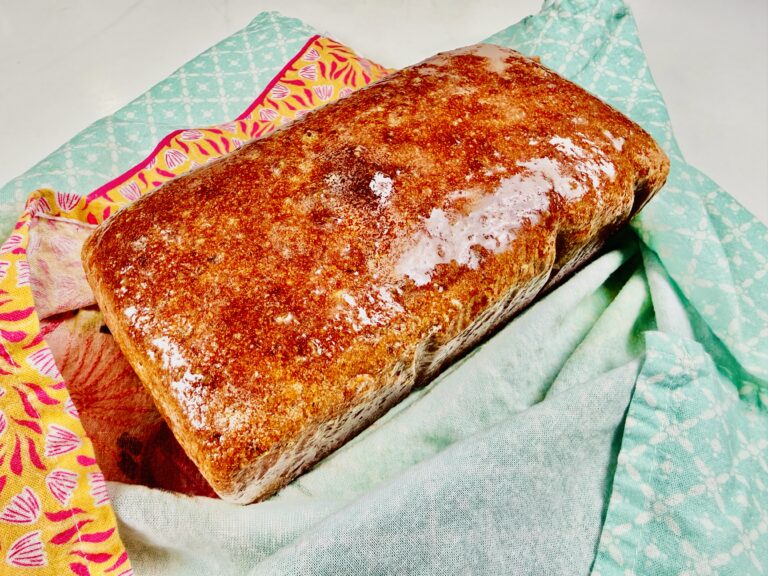
As soon as the loaves come out of the oven, rub butter generously over the tops. This softens the crust and adds flavor. Let the loaves rest in the pans for 10 minutes.
After 10 minutes, gently shake the loaves out of the pans and stand them on their sides. Cover with a towel and allow them to cool for a full 1 hour before slicing. Slicing too early will result in a gummy interior because the crumb continues to set as it cools. Be patient. The loaf will be worth it.
Full Printable Recipe: Spelt Sandwich Bread
Ingredients:
- 6 cups spelt flour (freshly milled preferred)
- 2 cups water, room temperature
- 1/3 cup honey
- 1/3 cup oil
- 1 egg
- 2 teaspoons active dry yeast
- 2 teaspoons salt
Instructions:
- Combine 3 cups flour, water, oil, honey, and yeast in a large bowl. Stir to combine. Cover and rest 30 to 60 minutes.
- Transfer to stand mixer. Add salt and 1 cup flour. Begin kneading on medium-low. Add remaining flour 1/2 cup at a time.
- Knead for 15 minutes total until dough is smooth and slightly tacky.
- Perform the windowpane test. If gluten is not developed, knead 2 to 3 more minutes.
- Divide dough in half. Shape each portion using the jelly roll method. Pinch seam closed.
- Place shaped loaves seam-side down in two parchment-lined cast iron loaf pans.
- Cover and let rise until dough reaches the top of the pan or 1 inch above (approximately 1 hour at 73 degrees F).
- Bake at 350 degrees F for 30 minutes. Internal temperature should reach 190 degrees F.
- Immediately rub tops with butter. Rest in pans 10 minutes.
- Remove loaves from pans. Stand on sides, cover with a towel, and cool for 1 hour before slicing.
Tips for the Best Spelt Sandwich Bread Every Time
- Mill your spelt fresh if possible. Freshly milled spelt flour retains all the bran, germ, and oils that are stripped out of commercial flour. The flavor is nuttier, the nutrition is higher, and the texture is superior. If you are investing in a grain mill, spelt bread is one of the best places to start.
- Do not skip the autolyse rest. This 30 to 60 minute rest before kneading makes a significant difference in dough texture and gluten development. It allows the flour to fully hydrate and reduces the kneading time needed.
- Add flour slowly. Spelt absorbs liquid differently than regular wheat flour. Add the last cup of flour gradually and stop when the dough just clears the sides of the bowl. Overfloured spelt dough becomes crumbly.
- Watch the dough, not the clock, during the rise. Ambient temperature greatly affects how quickly dough rises. Use the visual cue of the dough rising to the top or slightly above the rim of the pan as your indicator.
- Use parchment paper in cast iron. Cast iron pans retain heat beautifully, but parchment makes removal effortless and prevents sticking without needing to season the pan heavily.
- Always rest before slicing. One full hour of cooling is not optional. The interior crumb needs time to finish setting. Slicing too early creates a gummy, underdone texture even if the bread is fully baked.
Frequently Asked Questions About Spelt Bread
Can I make spelt bread without a stand mixer?
Yes. You can knead the dough by hand on a lightly floured surface. Hand kneading will take 15 to 20 minutes. Be gentle with the dough and resist the urge to add too much flour. The dough should feel slightly tacky.
Is spelt bread healthier than regular wheat bread?
Spelt is considered an ancient grain and contains a slightly different nutrient profile than modern wheat, including higher amounts of certain minerals like manganese, phosphorus, and niacin. It is not gluten-free, but many people who have difficulty with modern wheat tolerate spelt better. Whole grain and freshly milled spelt flour retain the most nutritional value.
What is freshly milled spelt flour and where do I get it?
Freshly milled flour is flour ground at home from whole spelt berries using a grain mill. Spelt berries can be ordered online or found at health food stores. My favorite place to purchase Spelt Berries is from Azure Standard because the quality and price are unbeatable! Home mills such as the Wondermill, NutriMill or Mockmill are popular options. Freshly milled flour still contains the germ and oils, which makes it more nutritious and flavorful than commercial flour that has been processed and stored.
Why did my spelt bread come out dense?
Dense spelt bread is usually caused by one of three things: too much flour added to the dough, underdeveloped gluten (skipping or rushing the windowpane test), or insufficient rise time. Make sure your yeast is active, your dough passes the windowpane test before shaping, and the loaves have risen fully before baking.
Can I use whole wheat flour instead of spelt?
Whole wheat flour can be substituted, but the results will be different. Whole wheat absorbs more liquid and has a stronger, more bitter flavor. The bread will likely be denser. If substituting, you may need to add a bit more water and the texture will not be as tender.
How do I store spelt sandwich bread?
Store at room temperature in a bread bag and this one has beeswax in it, beeswax wrap, or an airtight container for 3 to 4 days. For longer storage, slice the cooled loaf and freeze in an airtight freezer bag for up to 3 months. Toast slices directly from frozen.
What is the windowpane test?
The windowpane test is a way to check that gluten has developed properly in your bread dough. Pinch off a small piece of dough and slowly stretch it between your fingers. If it forms a thin, translucent membrane without tearing, the gluten is developed. If it tears immediately, knead a few more minutes and test again.
Can I make this recipe dairy-free?
Yes. Simply use a dairy-free butter or omit the butter topping at the end. The bread itself contains no dairy. You can use coconut oil in place of butter for rubbing the top of the loaf.
How to Store Spelt Bread
Room temperature: Store in a bread bag or airtight container at room temperature for 3 to 4 days. Keep away from direct sunlight and heat.
Freezer: Slice the fully cooled loaf, place slices in a freezer-safe bag, and freeze for up to 3 months. Remove individual slices as needed and toast directly from frozen. This is the best way to always have fresh spelt bread on hand.
Refrigerator: Refrigerating bread is not recommended as it speeds up staling. Room temperature or freezer storage is preferred.
More Recipes You Might Love
- Whole Wheat Sandwich Bread
- Freshly Milled Einkorn Bread
- Sourdough Spelt Bread
- Spelt Dinner Rolls
- Ancient Grain Cinnamon Raisin Bread
Final Thoughts on This Spelt Sandwich Bread Recipe
This spelt sandwich bread recipe is one of those foundational recipes that, once mastered, becomes a weekly staple. The combination of honey sweetness, a tender crumb from the egg and oil, and the slightly nutty character of spelt creates a loaf that truly stands apart from anything you can buy at a grocery store.
Baking with freshly milled spelt flour is a small step that makes a big difference. If you have a grain mill at home or have been curious about buying one, this recipe is a wonderful place to start. Your family will taste the difference immediately.
If you make this recipe, Message me through SUBSTACK and let me know how it turned out. I read every single one.
Happy Baking ~ Ashley💛🍞

DISCLAIMER: As an Amazon Associate, I earn from qualifying purchases. I only share tools I personally use and love.
Spelt Sandwich Bread 2 loaves
Ingredients
Method
- Mix 3 cups flour, water, oil, honey and yeast and let it rest for 30 minutes to an hourIn a mixer – add salt and 1 cup of flour and begin mixing. Continue adding in flour ½ cup at a time. I use a kitchen aid mixer and it took me 15 minutes to knead.Do a window pane test so you will know that your gluten is developed.Shape with my jelly roll method – see my youtube video to see how to do this .Line 2 cast iron pans with parchment paper and place shaped loaves in them. Cover with a towel and let rise to top or 1 inch above. Mine took 1 hour at 73 degrees. Bake 350 for 30 to 35 minutes depending on your ovenInternal temp should read 190 degreesLet sit in pan for 10 minutes and rub with butter on top for soft crustThen shake out of the pan and put on side for one hour covered before slicing into it.